Dec 5 Newsletter — OY Federal Updates
Let’s Catch Up
U.S. Department of Education Announces Interagency Agreements
At the end of November, the U.S. Department of Education (ED) announced six new interagency agreements with four agencies as part of the overarching goal to dissolve ED. These agencies are the U.S. Departments of Labor (DOL), Interior, State, and Health and Human Services (HHS). Now, those four agencies will “manage the grant competitions, provide technical assistance, and integrate ED’s” programs into these agencies’ programming, while ED will continue statutory oversight of the programs. The affected programs’ statute does designate oversight of the programs with ED, so technically the program management can be moved but not the programs themselves.
Some implications so far include:
More than $33 billion of K-12 education funds will now be managed by DOL, including Career Technical Education (CTE), adult education, and postsecondary education programs.
About $349 million will now be managed at Interior.
About $75 million for Childcare Access Means Parents In School (CCAMPIS) is now be managed at HHS.
As of now, two of the largest ED programs – Pell Grant and Special Education – have not been moved from ED. But close to 50% of ED’s discretionary funding is with one of the four aforementioned agencies.
Fiscal Year 2026 Appropriations Continues to Stall
The federal government is currently operating on a continuing resolution (CR) while full Fiscal Year 2026 (FY26) appropriations bills are in the works. The Senate plans to introduce the Labor, Health and Human Services, Education, and Related Agencies (Labor-HHS-Ed) appropriations bill as part of a package that will also include: Defense; Commerce, Science, Justice, and Related Agencies; and Transportation, Housing and Urban Development, and Related Agencies.
Below is a refresher of key parts of the CR.
This CR extends current funding levels (FY25 levels) through January 30, 2026.
This CR requires a vote by the Senate on healthcare subsidy extensions by December 12th. Affordable Care Act tax credits will expire at the end of this month. It's important to note that the CR does not require a vote from the House.
The Reductions in Force (RIFs) that took place through mass firings at the U.S. Department of Education (ED) are cancelled until January 30th. These RIFs were also stopped by courts during the shutdown.
Back pay will be provided for federal employees.
The Senate is aiming to introduce full FY26 funding packages beginning this week, including the Labor, Health and Human Services, Education, and Related Agencies (Labor-HHS-Ed) appropriations bill. The Labor-HHS-Ed text is expected to be part of a package of appropriations bills that will include: Defense; Commerce, Science, Justice, and Related Agencies; and Transportation, Housing and Urban Development, and Related Agencies.
RYC Strategic Goals
The RYC works under the vision of reconnecting 1 million young people each year to education and employment through increased federal investments. This goal cannot be reached by the traditional federal appropriations process alone.
In “Stepping Stones to Reconnecting 1 Million Young People: Ideas from the Reconnecting Youth Campaign” Thomas Showalter discusses ways that our field can work together to reach this goal through annual appropriations, youth-focused apprenticeships, improving access to career-navigation, increasing wages for young people, and more.
RYC New Campaign Video
The time to invest in our young people is now.
The Reconnecting Youth Campaign just dropped a powerful video featuring the voices of young leaders who met with their Congressional representatives this summer to explain why Congress must invest in education, training, and workforce programs for young people.
Hear directly from young leaders urging Congress to invest in reconnecting the 4.8 million Opportunity Youth nationwide.
Opportunity Youth Congressional Liaison Update
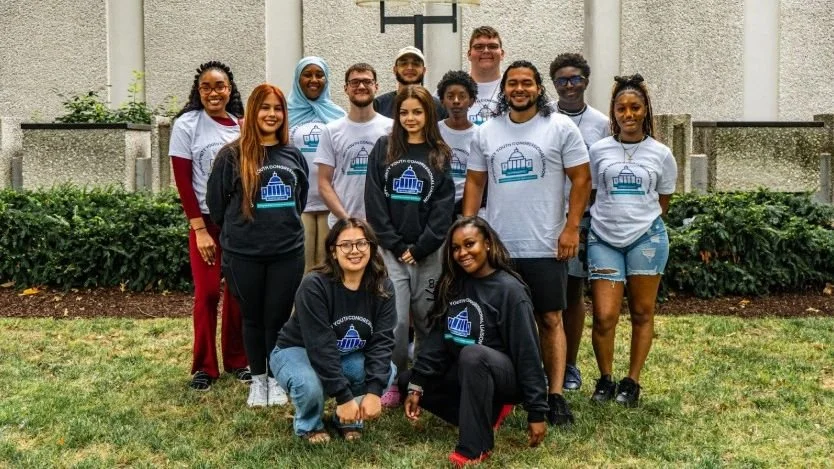
From Saint Louis to Capitol Hill, I’m Raising My Voice for Change
Precious Barry describes her participation in the Opportunity Youth Congressional Liaison Program in Washington, D.C., where she met with legislators, learned about power and community organizing, and represented young people from often-overlooked neighborhoods. She returns home energized and determined to ensure that youth voices are not just heard but centered in policy decisions.
Resource Center
Economic Bill of RYTS (Real Youth Troubles & Solutions)
MyPath's Youth Economic Bill of RYTS (Real Youth Troubles and Solutions) is a document created by and for youth that identifies the most pressing financial issues young people around the country face and offers policy-based youth-centered solutions. The current version was created in 2019 and reflects the needs of youth navigating a global pandemic. The current 2025-2026 POWER Leaders cohort is working to 'refresh' the document to reflect the current realities and needs of young people. As the group creates a first draft, we want to gather input from as many voices and policy perspectives as possible. We invite you to review the current Bill of RYTS and share your feedback- what feels most relevant, what may be missing, and what should be reconsidered as we shape the next iteration of this important youth-centered policy tool.
Why New SNAP Work Requirements Undermine Workers and States
The National Skills Coalition (NSC) writes about the new federal work requirements for the Supplemental Nutrition Assistance Program (SNAP) through the “Big Beautiful Bill” (H.R. 1) that was passed earlier this year. This article discusses how the work requirements are actually barriers to workers finding and keeping good jobs, and will ultimately block people from food assistance during the process.
Support for Extending the Enhanced Premium Tax Credit
Please fill out this action alert from Young Invincibles to tell Congress to extend the Enhanced Premium Tax Credits.
The Anne E. Casey Foundation invests in efforts to equip OY with the skills, credentials, and experiences needed to prepare for placement in their first job, gain experience, and grow their careers. This report highlights key strategies that Casey and its partners have implemented to help young people navigate transitions from school to work.
Monthly Opportunity Youth Policy Stakeholders Meeting
For all those with important perspectives to share and a willingness to engage in federal advocacy and implementation, but for whom weekly meetings would be overkill, we will host monthly meetings that cover the content from both meetings above (advocacy and implementation), briefing participants on key developments, soliciting views and priorities, and providing meaningful opportunities to engage. These meetings are designed particularly for organizations whose work is not primarily federal advocacy, but whose voices are critical to ensure federal efforts meet their needs, for example, Aspen Opportunity Youth Forum sites, LEAP sites, and NLC Reengagement Network participants.
Meetings are held on the last Monday of each month at 4pm (EST). Register here.
Connect With Us On LinkedIn!
The Reconnecting Youth Campaign is on LinkedIn! Give us a follow to keep up with news and resources, and message us if there’s a post you’d like amplified.
Get These Updates in Your Inbox
We send a few emails like this each month with information and resources you need to advocate for Opportunity Youth. Sign up below to get these directly to your inbox!
